
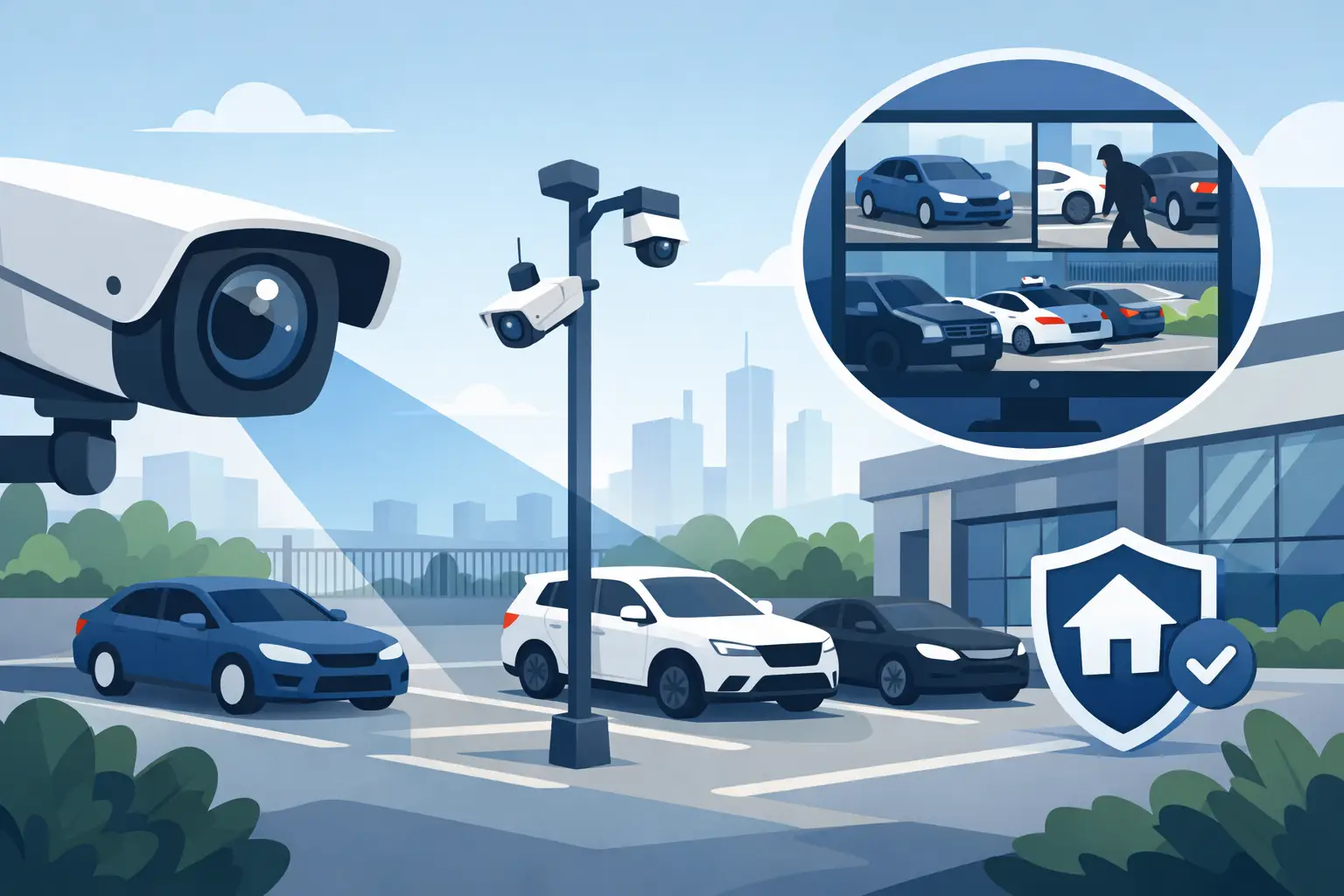

A parking lot can be the most exposed part of a property. Vehicles sit unattended, people arrive and leave at different hours, and a single incident can create safety concerns, insurance questions, and costly damage. Effective parking lot surveillance gives property owners a clear view of what happens beyond the building - before, during, and after an event.
For a retail center, apartment community, office, school, or industrial site, the goal is not simply to install cameras on poles. The goal is to create reliable coverage that helps deter crime, supports fast response, and produces usable video when it matters.
Why Parking Lots Need More Than Basic Cameras
Parking areas create blind spots that are easy to overlook. A camera above a building entrance may record people walking in and out, but it may not identify a vehicle entering from the far side of the lot, capture activity between parked cars, or show what happened near a dumpster, loading area, or gate.
The common risks are familiar: vehicle break-ins, vandalism, catalytic converter theft, hit-and-run accidents, unauthorized parking, illegal dumping, and after-hours trespassing. For residential properties, there may also be concerns about package theft, unfamiliar visitors, or repeated activity around residents' vehicles. Businesses may need documentation for employee safety issues, customer complaints, deliveries, or liability claims.
Visible cameras can discourage opportunistic behavior. But deterrence is only one part of the job. A system must also deliver enough detail to identify faces, read relevant vehicle information when conditions allow, and track an incident through the property. Grainy footage that cannot answer basic questions offers little value after the fact.
What Good Parking Lot Surveillance Should Accomplish
A properly designed system starts with the questions a property owner actually needs answered. Who entered the lot? Which direction did they travel? What vehicle was involved? Did someone approach a particular door, vehicle, or fenced area? Can the footage be viewed quickly from a phone or computer?
Camera placement, resolution, lighting, recording capacity, and network performance all affect those answers. High-definition and ultra high-definition cameras provide better detail than older analog systems, but more resolution does not automatically solve every problem. A camera that is too high, too far away, or pointed into headlights may still miss a usable image.
A dependable design usually separates wide-area observation from identification coverage. Wide views show overall activity, traffic flow, and groups of people. More focused cameras cover entrances, exits, payment areas, pedestrian paths, loading zones, and other locations where identification is most likely to be needed.
For properties with a gate or controlled entry, surveillance should support the access plan. A camera at the gate can verify who entered, while access control records may show when a credential, keypad code, or remote opener was used. Together, those systems give management a clearer record than either system alone.
Camera Placement Matters More Than Camera Count
Adding cameras without a site plan can leave expensive gaps. Every parking lot has different traffic patterns, lighting conditions, sight lines, and high-risk areas. A small office lot may need coverage at the driveway, main entrance, and rear employee parking. A larger apartment complex may require multiple zones, including mail areas, visitor spaces, dumpster pads, garages, and pedestrian walkways.
Cover entrances and exits first
Vehicle entrances and exits are priority points because they establish when traffic arrives or leaves. Cameras should be positioned to capture vehicles approaching at a useful angle, not merely as small objects in a distant overview. If vehicle identification is a major concern, the camera selection and placement should be designed specifically for that purpose.
Do not ignore the edges of the property
The far corners of a lot, rear drive lanes, fenced boundaries, and service areas often receive the least attention and attract the most unwanted activity. These spaces may need dedicated coverage, especially when they are poorly lit or out of view from staff areas.
Account for lighting, weather, and seasons
Parking lot cameras work outdoors year-round. Rain, snow, wind, direct sun, and nighttime glare can all affect video. Cameras need weather-rated housings, stable mounting, and proper adjustments for changing light. At night, infrared illumination can help in dark areas, while sites with strong headlights or parking lot fixtures may need cameras configured to manage contrast and glare.
A professional walkthrough helps identify problems that are not obvious from a property map. Tree growth may block a view in summer. A delivery truck may obstruct a camera mounted too low. A bright sign may wash out an image after dark. These are installation details that affect real-world results.
Remote Viewing Helps Staff Respond Faster
Remote access is one of the most useful features of a modern IP camera system. Authorized users can check live views and review recorded video from a smartphone, tablet, or computer. For a business owner, property manager, or facilities director, that means less time traveling to the site just to verify a concern.
Remote viewing is especially useful for after-hours alarms, opening and closing procedures, gate activity, deliveries, and weather-related property checks. If an alarm is triggered, a manager may be able to view the affected area before deciding whether to call law enforcement, contact an employee, or dispatch maintenance.
However, remote access must be set up correctly. Weak passwords, poorly configured routers, and unsupported equipment can create security risks or make a system unreliable. A camera system is part of the property's network, not a standalone appliance. Proper network configuration, user permissions, software updates, and secure remote access are part of a dependable installation.
Recording Time Should Match Your Operations
Many owners discover too late that their system recorded over an important event. Recording retention depends on the number of cameras, resolution, motion settings, activity level, and available storage. A busy commercial lot recording multiple high-resolution cameras around the clock will require more storage than a quiet residential driveway.
There is no single right retention period. Some properties may only need two weeks of video for basic incident review. Others may need 30 days or longer because of reporting requirements, management schedules, or the time it takes for a customer, tenant, or employee to report damage.
Motion-based recording can conserve storage, but it must be configured carefully. In a busy lot, constant motion from vehicles, shadows, rain, and headlights may trigger frequent recording. Continuous recording can provide a more complete timeline, but it uses more storage. The best approach depends on the location and how the footage will be used.
Parking Lot Surveillance and Privacy Expectations
Security cameras should focus on legitimate property protection and safety needs. Parking lots, entrances, drive lanes, and common outdoor areas are typical surveillance locations. Cameras should not be aimed into private residential windows, restrooms, changing areas, or other spaces where people have a reasonable expectation of privacy.
Audio recording requires additional caution because laws and expectations can vary. In most parking lot applications, clear video coverage is the priority. Property owners should also establish who can access footage, how long recordings are retained, and how requests for video are handled. Limiting access protects both the system and the people on the property.
When to Upgrade an Older System
Older camera systems often show their limits when an incident occurs. Common warning signs include blurry video, frequent recorder failures, cameras that stop working in bad weather, limited storage, no remote access, and difficulty locating footage. If the system cannot provide a clear answer quickly, it may not be meeting the property's current needs.
An upgrade does not always mean replacing every cable and component at once. In some cases, existing pathways or infrastructure can be evaluated and used as part of a phased plan. In other cases, new IP cabling, network equipment, or wireless links may be the better long-term choice. The right answer depends on the site, existing equipment, budget, and required video detail.
Choose Installation and Support That Last Beyond Day One
Parking lot surveillance is not a plug-and-play project. Cameras must be mounted securely, aimed correctly, protected from weather, connected to reliable power and networking, and tested under daytime and nighttime conditions. A system also needs support after installation, whether that involves adjusting a camera, recovering access after a router change, expanding coverage, or replacing failed equipment.
ATECH SECURITY LLC designs and installs customized camera, access control, alarm, and gate solutions for properties throughout Southern New Jersey, Philadelphia, and Pennsylvania. A site-specific approach helps make sure the system fits the property instead of forcing the property to fit a generic package.
The best time to assess a parking lot is before an incident forces the decision. Walk the property after dark, look for the places people cannot easily see, and consider what evidence you would need if something happened there tomorrow. That is where a well-planned camera system earns its value.
Comments