
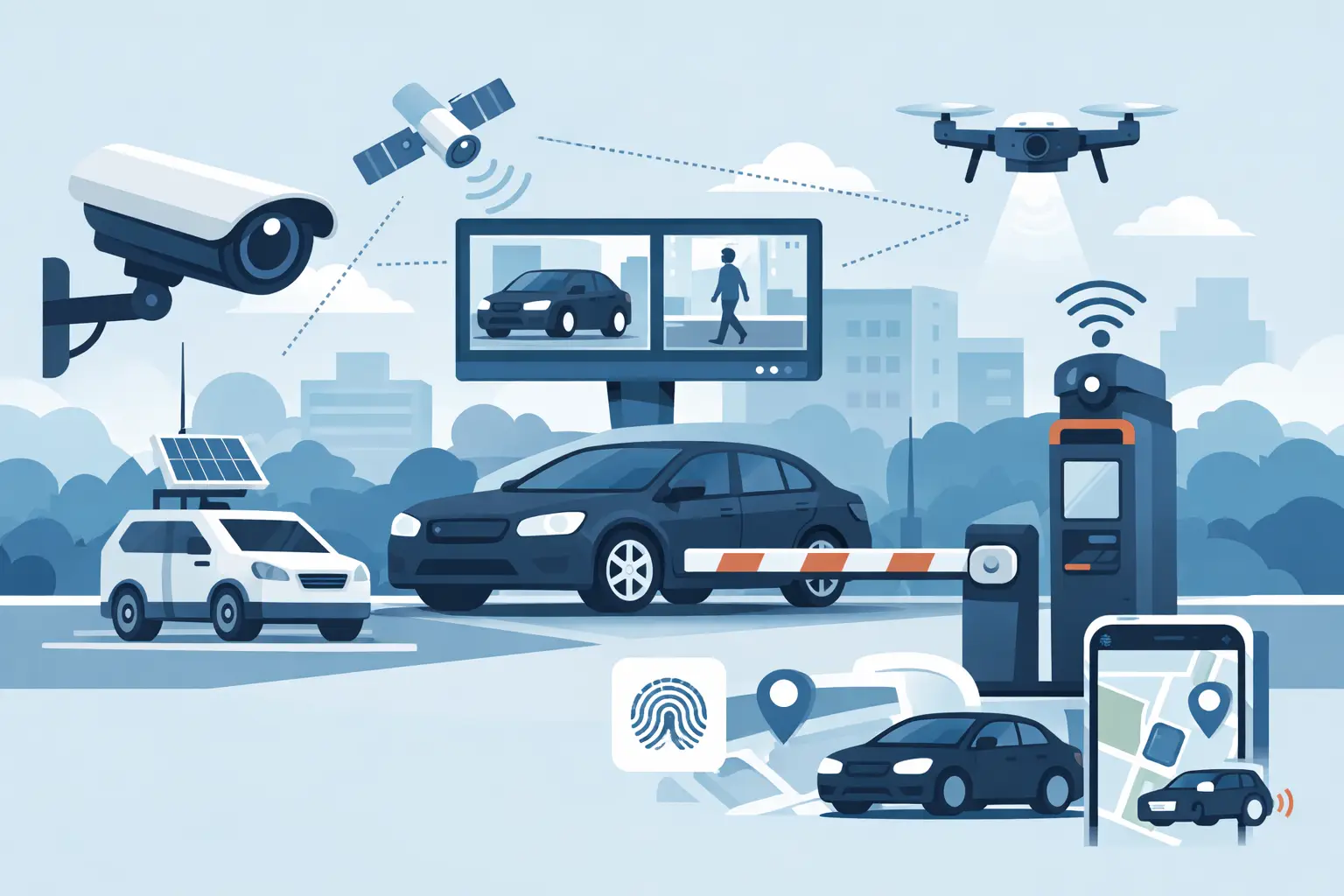

A parking lot can become a security concern long before a break-in, theft, or vehicle damage occurs. Poor visibility, uncontrolled vehicle access, blind spots, and unclear procedures create opportunities for problems. Knowing how to secure parking lots means building a practical system that helps deter incidents, document activity, and give staff a clear way to respond.
For businesses, apartment communities, schools, medical offices, and public facilities, the right approach is rarely a single camera or gate. Effective parking lot security combines physical design, reliable electronic systems, and ongoing attention to what is happening on the property.
Start With the Risks on Your Property
Every lot has different vulnerabilities. A retail center may be focused on vehicle break-ins and employee safety after closing. A school or municipal facility may need to control who can enter during the day while preserving access for approved visitors. A residential property may need to stop unauthorized parking and package theft without making daily access difficult for residents.
Walk the property at the times problems are most likely to occur, especially early morning, after dark, and during shift changes. Look for areas where someone could approach a vehicle unseen, enter through a side drive, or remain in the lot without being noticed. Pay close attention to dumpster areas, rear entrances, stairwells, loading zones, overflow parking, and the spaces farthest from the building.
This assessment should also identify operational needs. A lot that receives customers all day needs a different access plan than a secured employee facility. The goal is not to make every parking space inconvenient. It is to put meaningful controls around the places and times where risk is highest.
Use Camera Coverage That Produces Useful Evidence
Visible cameras are one of the strongest deterrents in a parking lot, but only when they are placed and configured correctly. A camera mounted too high, aimed too wide, or installed without proper night performance may show that an incident happened without providing a usable image of the person, vehicle, or license plate involved.
A well-designed CCTV system should cover entrances and exits, driving lanes, pedestrian routes, building access doors, and vulnerable perimeter areas. High-definition cameras can provide broad scene coverage, while dedicated cameras at entry and exit points can be positioned to capture vehicle details. In many cases, using both is more effective than relying on one wide-angle camera for the entire lot.
Night performance matters as much as daytime image quality. Parking lots often have uneven lighting, headlight glare, shadows, and weather exposure. Cameras should be selected and adjusted for those conditions, not simply installed based on their advertised resolution. Proper mounting height, lens selection, infrared capability, and image settings all affect what can be seen when it counts.
Remote viewing can also help owners and managers check activity from a smartphone or computer. That does not mean someone must watch cameras constantly. It means authorized personnel can quickly verify an alarm event, respond to a complaint, or check the lot after hours without driving to the site first.
Avoid common camera mistakes
Do not assume more cameras automatically mean better protection. A smaller number of properly placed cameras with dependable recording is often more valuable than a large system with blind spots and poor images. Recording retention should match the property’s needs as well. If an incident is discovered days later, footage must still be available.
Network design is another critical detail. IP camera systems depend on stable power, secure network connections, sufficient storage, and reliable remote access. Professional installation helps prevent problems such as intermittent video loss, weak wireless connections, exposed cables, and systems that are difficult to service later.
Control Vehicles and People at Entry Points
The most effective parking lot security starts at the perimeter. If anyone can drive into a private area at any time, cameras may document unauthorized access but do little to prevent it. Electronic gate openers, barriers, and controlled entry systems create a clear boundary between public and private space.
For employee lots, residential communities, fleet yards, and secured facilities, remote-capable gates can be operated by authorized users through key fobs, cards, mobile credentials, call boxes, or approved remote controls. The right credential depends on how many users need access and how frequently permissions change. Card or smart access control is often a strong choice where managers need to add or remove access quickly without collecting physical keys.
Visitor access needs careful planning. A gate that is too restrictive can create traffic backups and frustrate customers. A gate that stays open all day offers little protection. Some properties benefit from scheduled gate operation, with open access during business hours and controlled access after closing. Others may need separate entry and exit lanes, visitor call stations, or designated delivery procedures.
Access control also creates accountability. When credentials are assigned to individuals rather than shared freely, facility managers can better understand who entered a secured area and when. This is especially useful for businesses with valuable equipment, schools, apartment properties, and sites with restricted staff parking.
Improve Lighting Without Creating New Blind Spots
Good lighting supports both safety and surveillance. People are more likely to feel comfortable using a well-lit lot, and cameras can capture clearer images when walkways, doors, and driving lanes are illuminated consistently.
The answer is not simply adding the brightest possible fixtures. Excessive or poorly aimed lighting can create glare, harsh shadows, and visibility issues for drivers. It can also reduce camera performance if lights shine directly into the lens. A practical lighting review considers coverage, fixture placement, color temperature, maintenance, and how the lighting works with cameras at night.
Prioritize pedestrian paths from parking spaces to entrances. Rear doors, accessible parking spaces, payment areas, loading zones, and stairways deserve special attention. Trim landscaping that blocks fixtures or provides concealment near the building. If trees, signs, or seasonal growth block a camera view, the security system may need adjustment as well.
Connect Alarms to the Areas That Matter Most
Parking lots are large, open spaces, so traditional motion detection is not always the right fit by itself. Wind, animals, traffic, and changing weather can create false alarms. However, alarm devices can be very effective when used at specific vulnerable points, such as gates, storage enclosures, equipment yards, doors leading into the building, or restricted pedestrian passages.
A monitored alarm can alert the right people when an unauthorized opening, forced gate, or protected-area intrusion occurs. When paired with cameras, an alarm event can direct attention to the correct video footage immediately. This gives managers a better chance to verify what happened and decide whether to contact security personnel or law enforcement.
The best design depends on the site. A small professional office may only need camera coverage, lighting, and door access control after hours. A contractor yard or industrial property may need perimeter protection, gate control, video verification, and multiple layers of alarm detection. Security should match the real exposure, not a one-size-fits-all package.
Make Procedures Part of Parking Lot Security
Technology works best when people know how to use it. Staff should understand which doors and gates must remain closed, how to report suspicious activity, and who has authority to review camera footage or change access permissions. Property managers should periodically remove former employees, tenants, or vendors from access lists.
Clear signs can reinforce that a lot is monitored and that parking is restricted where appropriate. Signs alone will not stop determined criminals, but they support visible cameras, gates, and lighting by making the property’s security posture clear.
Maintenance is equally important. A camera covered by dirt, a gate with a failing operator, a burned-out light, or a recorder with no available storage can leave a property exposed at the worst time. Schedule routine checks, test remote access, confirm recording playback, and address service issues before they become security failures.
Build a System That Can Be Supported Locally
Parking lot systems operate outdoors, in changing weather, and often around high traffic. Installation quality and service support matter. Equipment should be selected for the environment, cabling should be protected, and the system should be organized so future repairs or expansion do not require starting over.
ATECH SECURITY LLC designs and supports customized camera, alarm, access control, and gate solutions for properties throughout Southern New Jersey and the Philadelphia area. A site-specific design can account for your lot layout, available network infrastructure, daily traffic patterns, and budget while keeping the system manageable for the people who use it.
A secure parking lot does not need to feel like a fortress. It should feel orderly, visible, and controlled - a place where customers, residents, employees, and visitors can arrive and leave with greater confidence.
Comments