
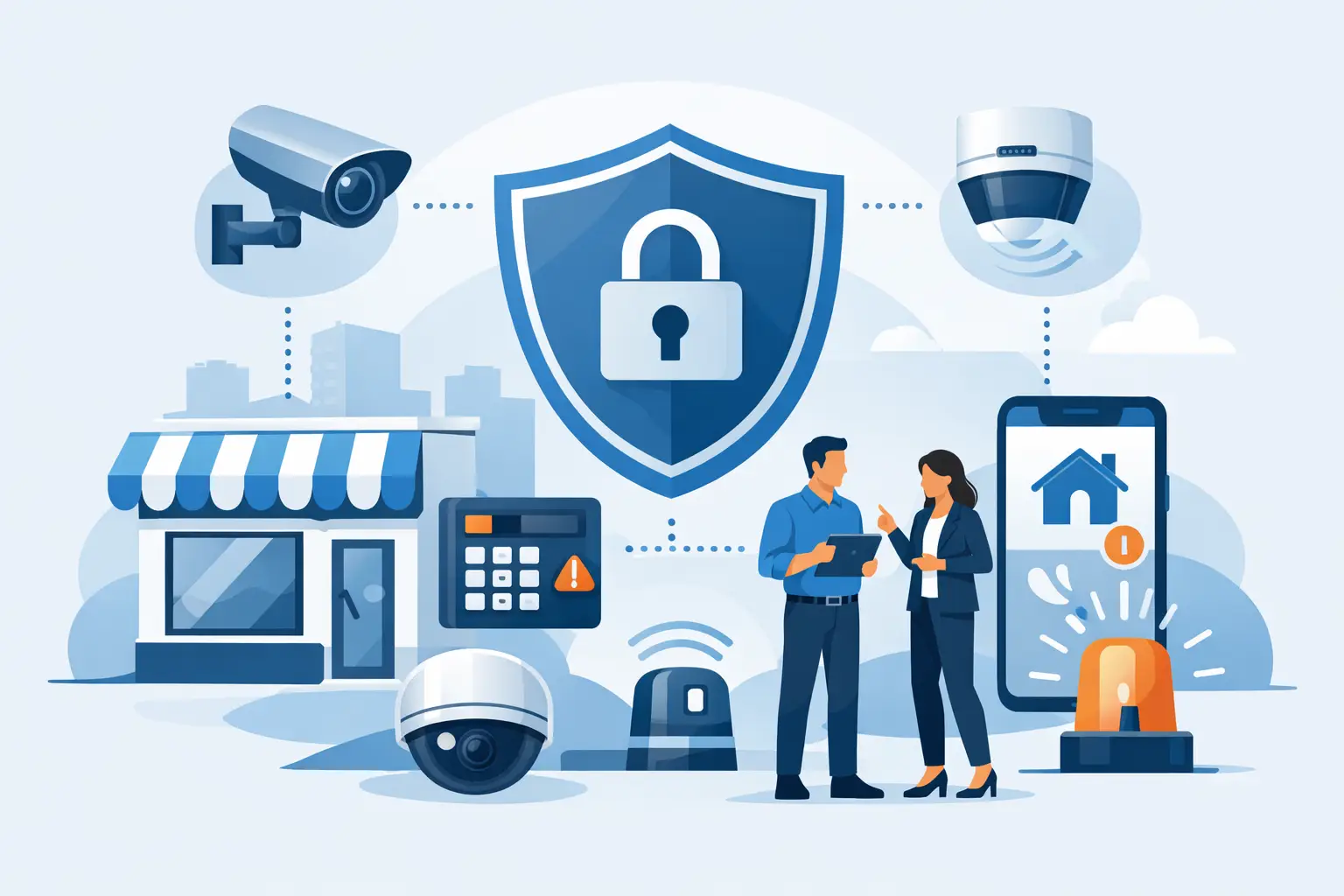

A break-in at a small business rarely stops at a broken door or window. It can mean lost inventory, damaged equipment, interrupted operations, and a long morning dealing with police, insurance, and upset staff. That is why choosing among the best small business alarm systems is less about picking a brand name and more about building the right protection for your space, schedule, and risk level.
For most businesses, the right alarm system is not a single box on the wall. It is a combination of intrusion detection, smart notifications, professional monitoring, and integration with cameras or access control when needed. If you run a retail store, office, warehouse, restaurant, or mixed-use property, the best fit depends on how people enter the building, what needs to be protected after hours, and how quickly you need to know when something is wrong.
What makes the best small business alarm systems work
The strongest systems do three things well. First, they detect real events quickly and reliably. Second, they notify the right people without creating constant false alarms. Third, they fit the daily routine of the business instead of getting bypassed or ignored.
A basic setup may include door contacts, motion detectors, glass break sensors, keypad access, a loud local siren, and app-based alerts. That may be enough for a small office with limited public traffic. A convenience store, auto shop, or storefront with cash handling usually needs more, including monitored alarm service, video verification, and tighter after-hours protection.
The reason some alarm systems underperform is not always the hardware. Poor device placement, weak programming, bad user training, and no plan for arming and disarming are common problems. A well-installed system with a clear operating routine will usually outperform a fancier setup that staff do not trust or understand.
Best small business alarm systems by business need
If you are comparing options, it helps to think in terms of business type instead of just product features. The best small business alarm systems are the ones that match the way your property is used.
Retail stores and customer-facing businesses
Retail locations need perimeter protection, interior motion coverage, and strong opening and closing control. Front and rear doors, stock rooms, and cash handling areas deserve special attention. If staff members open or close alone, app alerts and user-specific codes can help owners track who armed or disarmed the system and when.
In these settings, camera integration matters. An alarm signal paired with video clips gives owners a faster way to assess what happened. It also helps reduce uncertainty when an alert comes in after hours.
Offices and professional spaces
Offices often need quieter, more flexible protection. The goal is not only to stop burglary, but also to control who enters certain rooms and when. A standard intrusion system may work well at the main entry points, but offices with sensitive records, IT closets, or expensive equipment benefit from layered protection.
This is where alarm and access control often work better together. If an employee should enter the front door but not the server room, that should be managed through the system rather than through policy alone.
Warehouses, shops, and light industrial spaces
These properties tend to have more perimeter exposure and fewer people inside after hours. Overhead doors, side entrances, fenced access points, and large interior areas all change the design. A simple residential-style package usually falls short here.
Commercial-grade devices, long-range sensors, and network-capable systems make more sense. If you store tools, copper, equipment, or vehicles, outdoor detection and remote visibility may be just as important as the indoor alarm panel.
Restaurants and service businesses
Restaurants deal with frequent staff turnover, late hours, deliveries, and cash exposure. The best alarm system here should be easy to manage. If it takes too many steps to arm correctly at closing time, somebody will eventually skip one.
Simple keypad workflows, separate user codes, and mobile notifications help. So does tying alarm events to camera footage near registers, back doors, and storage areas.
Wired vs. wireless alarm systems
This is one of the most common questions, and the answer depends on the building.
Wireless systems are faster to install and work well in smaller finished spaces where running cable would be disruptive or costly. They are often a good fit for leased offices, small retail suites, and businesses that need a straightforward deployment.
Wired systems still have real advantages. In larger facilities or permanent commercial installations, they provide strong reliability and reduce dependence on batteries at each device. If the property is being renovated, built out, or upgraded in a major way, wiring in the system usually makes sense.
There is also a middle ground. Many of the best small business alarm systems today use hybrid designs, with hardwired devices in key locations and wireless devices where access is difficult. That approach gives flexibility without sacrificing stability.
Features that matter more than flashy extras
A lot of marketing around alarm systems focuses on app screens and smart features. Those can be useful, but they should not distract from the essentials.
Reliable communication is critical. If the panel cannot send a signal during an outage or network issue, the rest of the system becomes less valuable. Cellular backup, battery backup, and proper network setup matter more than a polished mobile app.
User management is another major factor. Owners should be able to assign separate codes, remove access quickly, and review basic event history. This is especially important for businesses with multiple employees, cleaners, vendors, or part-time managers.
Professional monitoring is often worth it for commercial properties. Self-monitoring may sound cheaper, but if an alert comes in while you are driving, in a meeting, or asleep, the response can be delayed. Monitoring gives you another layer of protection, especially when the building is empty.
False alarm prevention deserves attention too. Good system design includes proper sensor selection, entry and exit delay planning, and user training. Too many false alarms can lead to frustration, fines, and staff ignoring real problems.
Integration changes the value of the system
An alarm system becomes more useful when it works with the rest of your security setup. Cameras help confirm events. Access control helps limit who can enter and when. Remote gate entry can protect parking lots, service yards, or private entrances.
For many businesses, integration is the difference between reacting and managing. Instead of getting a vague alert that a door opened, you can see the event, know which user entered, and verify whether the action was expected. That saves time and improves decision-making.
This is also where technical experience matters. Security systems now rely on IP networks, mobile apps, cloud services, and on-site hardware all working together. If the installer understands both low-voltage systems and the network environment, the finished setup is usually more dependable.
How to choose the right provider
Even the best equipment can disappoint if the installation and support are weak. Small businesses should look beyond product brochures and ask practical questions.
Who handles service calls after the installation is complete? How fast can someone respond if a keypad fails, a sensor starts causing trouble, or you need to add a user? Is the system being designed for your property, or are you being pushed into a prebuilt package that may not fit?
Local service has real value here. A provider that knows the area, understands common property layouts, and can respond quickly is often a better long-term choice than a distant company selling generic plans. For businesses in Southern New Jersey and the Philadelphia area, working with a contractor that can install, support, and troubleshoot modern electronic security on site can save a lot of time and frustration. That is one reason companies turn to ATECH SECURITY LLC for customized business security solutions.
Common mistakes when buying a business alarm system
The biggest mistake is buying on monthly price alone. A low monthly rate does not help much if the system misses key areas, creates nuisance alarms, or cannot scale as your business changes.
Another common issue is underestimating how the space is used. A front door and one motion detector may look fine on paper, but it may leave side entries, stock rooms, or service corridors exposed. Businesses also forget to plan for employee turnover. If user permissions and code management are not simple, security gets weaker over time.
Finally, some owners treat alarm systems as stand-alone tools when they really work best as part of a larger protection plan. If theft, unauthorized entry, and liability are concerns, it makes sense to think about cameras, access control, and remote management together.
The best small business alarm systems are the ones that fit your building, your hours, your staff, and your level of risk without making day-to-day operations harder. When the system is designed correctly, it becomes part of how you run the business with fewer surprises, faster awareness, and more confidence when you lock up at night.
Comments