

A lost key can turn into a full security problem faster than most property owners expect. One staff change, one tenant turnover, or one door left unmanaged is often all it takes to expose a building. That is why access control has become a practical upgrade for homes, businesses, schools, and public facilities that need more than basic locks and copies of keys.
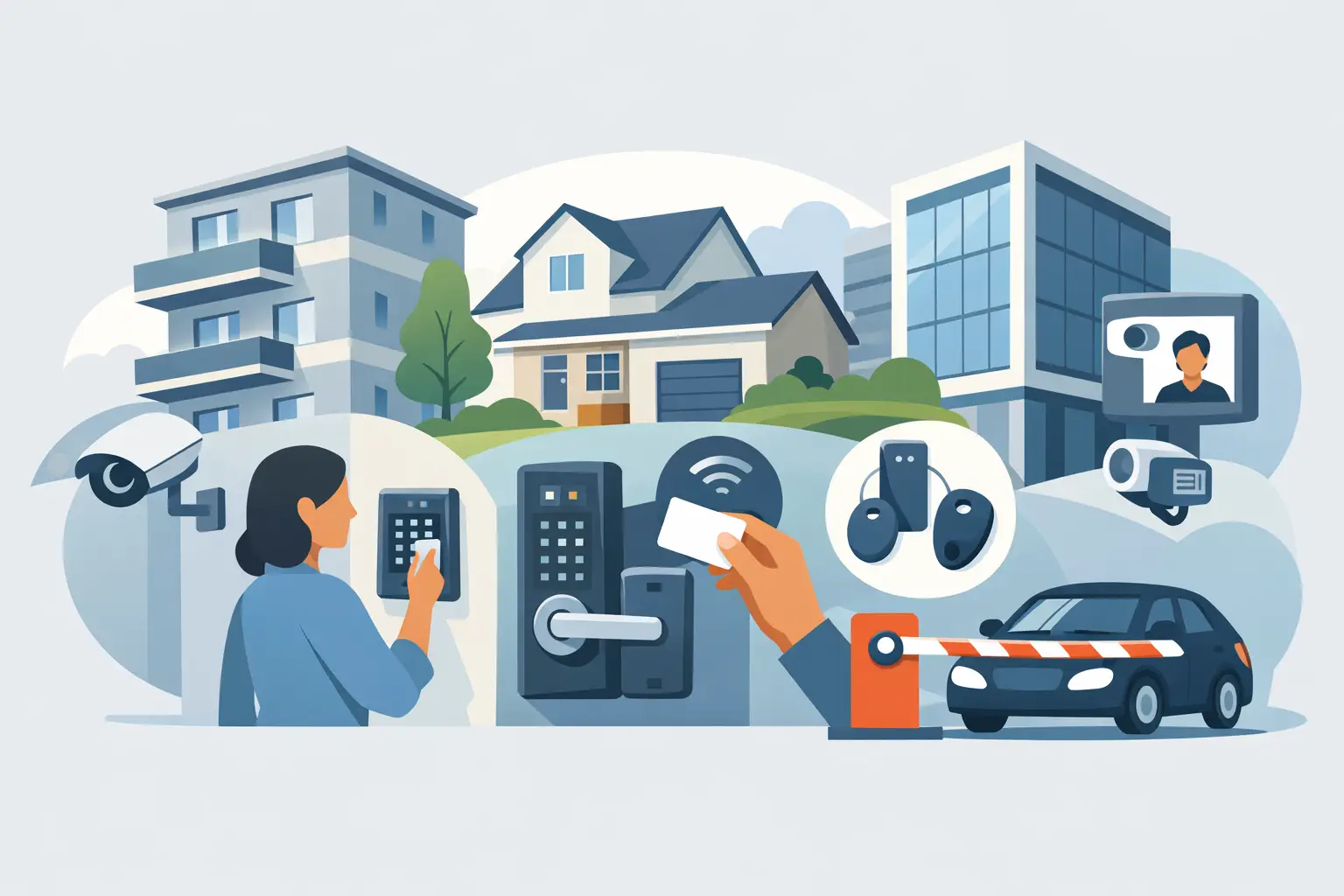
Access control gives you a better way to decide who gets in, where they can go, and when that access should apply. Instead of relying on physical keys that can be shared, misplaced, or never returned, you can manage entry through cards, fobs, mobile credentials, keypads, intercoms, and networked door hardware. For many properties, that means stronger security, fewer headaches, and much better visibility into daily activity.
What access control actually does
At its core, access control is about managing entry with intention. A front office may need to open at 8 a.m. for staff, stay locked to visitors during certain hours, and allow after-hours access only to approved personnel. A homeowner may want a gate or side door that can be opened remotely without handing out extra keys. A school may need scheduled access for faculty, limited access for vendors, and a record of who entered specific areas.
Traditional locks still have their place, but they do not offer much flexibility once a key leaves your hand. Electronic access control lets you assign permissions, adjust them quickly, and revoke them without replacing every lock on the property. That change alone saves time and money in many situations, especially when staff turnover or multiple users are involved.
Why more properties are moving away from keys
Keys are simple, but they are not easy to manage at scale. Once copies are made, control starts to fade. If one goes missing, there is usually no way to know whether it was lost, stolen, or duplicated. The usual answer is rekeying, which adds cost and disruption.
Electronic systems give property owners more control over everyday reality. You can set different schedules for different users, restrict access to certain doors, and update credentials without changing hardware at every opening. For businesses, that helps with employee management. For residential properties, it adds convenience without giving up security. For schools and public buildings, it supports a cleaner chain of accountability.
There is also a practical operational benefit. When access events are recorded, it becomes easier to review activity after an incident, confirm whether a door was used at a certain time, or identify gaps in procedure. That kind of visibility matters when security decisions need to be based on facts instead of guesswork.
Access control for different types of properties
The right system depends on the building, the users, and the day-to-day risk.
Homes and residential properties
For homeowners, access control often starts with convenience and quickly becomes a security upgrade. Front gates, side entrances, detached garages, and secondary doors can all be managed more effectively with electronic credentials or remote entry. That is especially useful for families, frequent deliveries, service providers, or properties where multiple people need access without passing around keys.
A residential setup does not need to be oversized to be effective. In many cases, a single controlled entry point paired with cameras or an intercom solves the main problem. The best result is usually a system that feels easy to use every day, not one that adds friction to routine life.
Businesses and commercial spaces
For small and midsize businesses, access control is often tied directly to loss prevention, employee management, and liability reduction. Office suites, retail spaces, warehouses, and mixed-use facilities all benefit from controlled entry, especially where inventory, equipment, records, or sensitive areas are involved.
A common mistake is treating every door the same. Most businesses do not need every opening fully controlled. They need the right doors controlled in the right way. That might mean badge access at the main employee entrance, keypad entry at a stock room, and scheduled locking on perimeter doors. A customized approach keeps the system practical and cost-effective.
Schools and public-sector facilities
Institutional settings usually have more users, stricter schedules, and a higher need for accountability. Faculty, administrators, maintenance staff, visitors, and vendors all have different access needs. Access control helps separate those roles clearly while supporting day-to-day operations.
In these environments, reliability matters as much as features. If a system is hard to manage or slow to service, it becomes a burden. Decision-makers usually need a setup that works consistently, integrates with existing infrastructure where possible, and can be supported locally when issues come up.
Choosing the right access control system
The best system is not always the most advanced one on paper. It is the one that fits the property and the people using it.
A small office may do well with a straightforward card access system on a few doors. A larger site may need multiple credential types, door schedules, remote management, and integration with cameras or alarms. A gated property may need operators, entry devices, and remote control from a phone or workstation. The details matter, because a mismatch between hardware and real-world use is where frustration starts.
There are also trade-offs worth considering. Cloud-managed platforms can offer easy remote administration, but they depend on stable connectivity and the right user permissions. On-premise systems can provide tighter local control, but they may require more direct IT involvement. Mobile credentials are convenient, though some users still prefer cards or fobs for speed and simplicity. None of these options are automatically better. It depends on your property, your staff, and how you need the system to perform.
Installation matters more than many buyers realize
Even good equipment can underperform if the installation is rushed or poorly planned. Door condition, frame alignment, lock compatibility, power requirements, network layout, and cable pathways all affect how well an access control system will work over time.
This is where field experience makes a real difference. Security hardware does not exist in isolation. It has to work with the physical opening, the building structure, and often the network behind it. A clean installation should account for how the property is actually used, how traffic moves, and what happens during power loss, emergencies, or service calls.
For newer IP-based systems, networking knowledge is especially important. Devices need to communicate reliably, credentials need to sync properly, and remote access features need to be configured securely. If the installer only understands one side of the job, either hardware or network, the property owner usually feels that gap later.
Service and support are part of the system
Access control is not a one-time purchase that should be ignored after installation. Users change, schedules change, doors wear down, and software settings occasionally need attention. Ongoing support is part of keeping the system useful.
That is one reason many property owners prefer working with a local provider that can respond quickly and handle both service and upgrades. If a reader stops working, a door is not latching correctly, or access permissions need to be updated fast, waiting days for help is not acceptable. Responsive support protects both security and operations.
ATECH SECURITY LLC works with property owners across Southern New Jersey and the Philadelphia area who need that mix of practical system design, solid installation, and dependable follow-up service. For many customers, that local accountability matters just as much as the equipment itself.
When it makes sense to upgrade
Most people do not replace keys and locks just because newer technology exists. They upgrade when the old setup starts creating risk or slowing things down. That often happens after employee turnover, repeated lost keys, a break-in, tenant changes, or growth that makes manual key management unrealistic.
It can also make sense when you are already improving related systems. If you are adding surveillance, updating alarms, or installing a gate operator, that is often the right time to evaluate access control as part of a broader security plan. Integrated systems are usually easier to manage than patchwork solutions added one at a time.
The goal is not to overbuild. It is to create a setup that gives you control, visibility, and confidence without making daily access harder than it needs to be.
Good security starts at the door, but the real value comes from knowing that entry is being managed on purpose. When access control is planned well, installed correctly, and supported by someone who understands both security hardware and the network behind it, it becomes one of the most useful upgrades a property can make.
Comments