
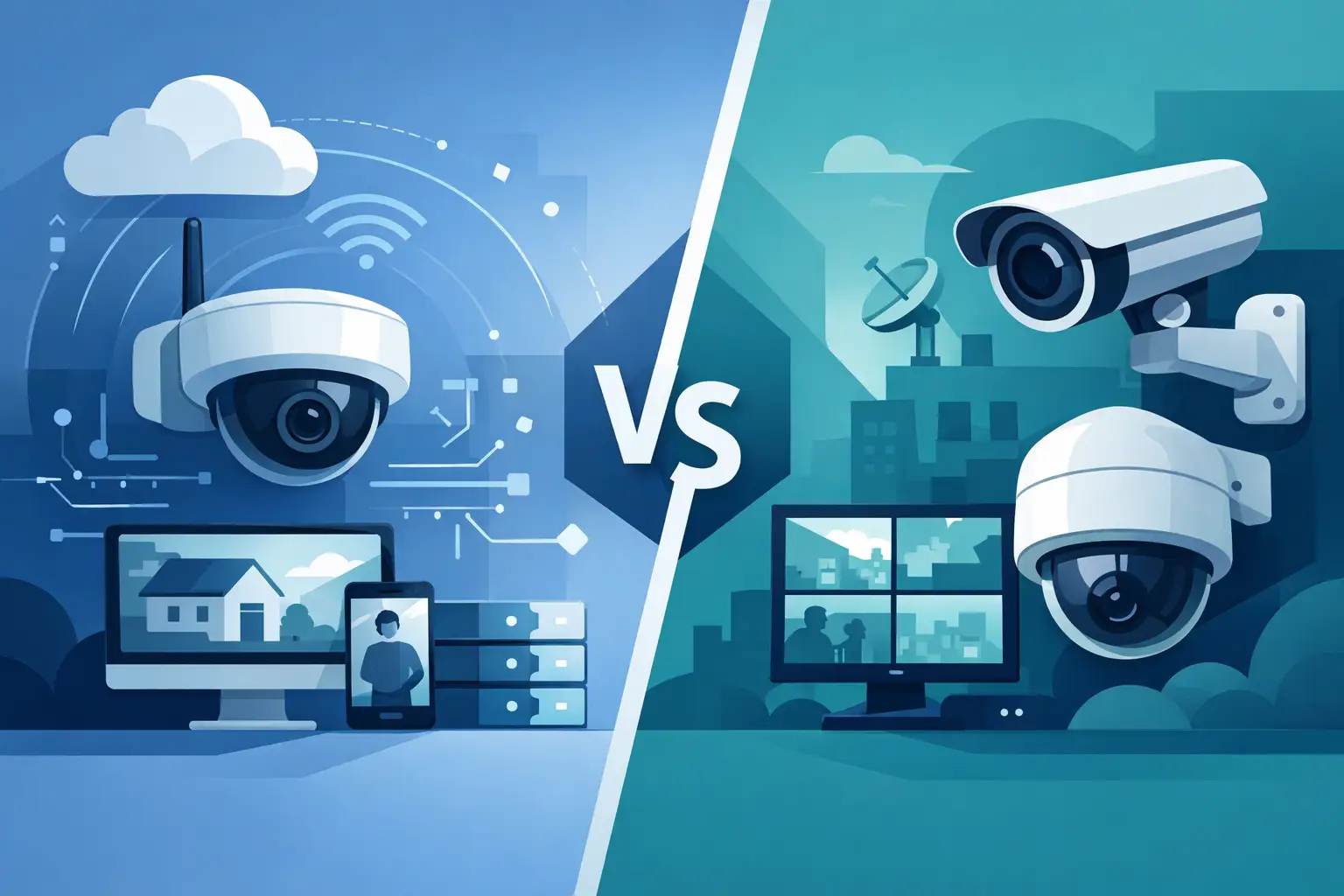

A lot of property owners ask about ip cameras vs cctv when they are replacing an older system or planning security for a new building. The right answer depends on what you need the system to do every day - not just what looks newer on paper. For a home, a storefront, a school, or a warehouse, the best fit usually comes down to image detail, remote access, wiring, budget, and how much future expansion you expect.
What matters in ip cameras vs cctv
The biggest difference is how video is captured and delivered. Traditional CCTV systems usually refer to analog cameras connected by coax cable to a DVR. IP camera systems send digital video over a network to an NVR or other recording platform. That may sound like a technical distinction, but in practice it affects image quality, scalability, remote access, and how the system is installed and supported.
Analog CCTV is still used because it can be cost-effective, familiar, and dependable in the right setting. IP systems are often preferred when better resolution, smarter features, and easier integration are priorities. Neither option is automatically better for every property.
Where CCTV still makes sense
If you already have usable coax cabling in place, CCTV can be a smart upgrade path. Many buildings in South Jersey and the Philadelphia area were wired years ago for analog surveillance, and in some cases that existing infrastructure can still support a modern HD-over-coax system. That can reduce labor, shorten installation time, and keep costs under control.
CCTV can also be a practical choice for smaller sites that need basic recording at key points such as entrances, cash areas, hallways, or parking lots. If the goal is straightforward monitoring without a lot of advanced user management or network integration, analog may do the job well.
There is a trade-off, though. Even with improved HD analog options, CCTV systems are generally less flexible than IP when it comes to scaling, advanced analytics, and detailed remote management. If your security needs are likely to grow, a cheaper starting point can become a limitation later.
Why many owners choose IP cameras
IP cameras are often the better fit when image detail matters. If you need to identify faces, read license plates under the right conditions, monitor wider areas, or review incidents closely, higher-resolution IP cameras usually provide a clearer path. For businesses, that often matters at entry doors, loading areas, point-of-sale locations, and parking lots. For homeowners, it matters at front doors, driveways, and perimeter areas.
Another advantage is flexibility. IP cameras can be easier to expand, easier to segment by user permissions, and easier to integrate with other systems such as access control, alarms, intercoms, and remote gate entry. That is especially useful for schools, offices, multi-building properties, and facilities that want centralized visibility.
Remote access is another major factor. Most people now expect to check cameras from a phone, tablet, or desktop. While both system types can offer remote viewing, IP systems are usually built with that expectation in mind and tend to support more modern management features.
Image quality is not just about megapixels
When people compare systems, they often focus on resolution first. That matters, but it is not the whole story. A camera that looks great on a spec sheet can still perform poorly if it is installed in the wrong place, aimed badly, or dealing with difficult lighting.
Good surveillance design looks at scene purpose. Do you need to detect movement, observe activity, recognize a familiar person, or positively identify someone? Those are different goals. A parking lot camera mounted too high and too far away may give you video of an incident without giving you usable details. That applies to both IP and CCTV.
IP cameras usually offer stronger options for image tuning, low-light performance, and scene-specific coverage. But the system still has to be designed correctly. In real-world security work, placement and lens selection matter just as much as the recording format.
Installation differences that affect cost
Cost is where many buying decisions are made, and it is also where oversimplified advice causes problems. CCTV may cost less upfront if a property already has coax cable and power in place. In that case, replacing old cameras and updating the recorder can be a practical move.
IP systems often require more planning because they rely on the network. That can include PoE switches, proper bandwidth planning, device addressing, secure remote access setup, and clean cable runs. For some properties, that is no issue. For others, especially older buildings or sites with weak network infrastructure, it adds work.
That does not mean IP is automatically expensive. In some projects, running one category cable to each camera with power and data together is cleaner and more efficient than working around older analog wiring. The final cost depends on the building, the coverage goals, and whether the network is ready for surveillance traffic.
IP cameras vs CCTV for homes
For most homeowners, the choice usually comes down to convenience and coverage. If you want clear video, motion alerts, smartphone access, and room to add cameras later, IP often makes more sense. It is especially useful if you want to monitor package deliveries, see who came onto the driveway, or check on a property while away.
CCTV can still work well in a home where the goal is simple local recording at a lower cost. A homeowner with an existing wired system may not need a full network-based upgrade right away. But if you are already investing in a new system, it is worth thinking a few years ahead. Many homeowners start with a few cameras and later want door station integration, gate control, or better remote access.
IP cameras vs CCTV for businesses and institutions
Commercial and institutional sites usually put more weight on manageability, retention, and expansion. A retail store may need reliable overview coverage plus sharper video at checkout. An office may want cameras tied to access control events. A school or municipal site may need multiple user levels, secure remote review, and cameras spread across several buildings.
That is where IP systems often pull ahead. They are typically better suited for larger deployments, centralized management, and integration with other low-voltage systems. They also tend to support more advanced search tools and event-based features that can save time during investigations.
Still, some businesses do very well with updated CCTV, especially in smaller footprints or in locations where using existing infrastructure keeps the project affordable. The right recommendation depends on the property, not a trend.
Cybersecurity and reliability
One area that gets overlooked in the ip cameras vs cctv discussion is cybersecurity. Because IP cameras live on a network, they need to be set up correctly. That includes passwords, firmware, permissions, segmentation, and remote access methods. A poorly configured IP system can create unnecessary risk.
That is also why installation experience matters. A proper IP deployment is not just about mounting cameras. It requires understanding networking, bandwidth, storage, and how to keep the system stable and secure. ATECH SECURITY LLC often sees problems caused by systems that were sold as easy but never configured correctly for the real environment.
CCTV systems are often seen as simpler, and in some ways they are. Their closed nature can reduce certain network concerns. But they still need dependable power, proper recorder setup, and ongoing service support if you want the system to perform when it counts.
How to choose the right system
The best starting point is not the camera type. It is the security objective. If your main concern is basic coverage at the lowest practical cost, CCTV may be enough. If you need sharper detail, smarter remote access, easier growth, and stronger integration, IP is usually the better investment.
It also helps to think beyond the day of installation. Ask how long video should be retained, who needs access, whether the site may expand, and how quickly support is available if something stops working. A low price is not a good value if the recorder fails, the images are unusable, or nobody can help when the system goes offline.
The strongest security systems are not chosen by label. They are matched to the property, installed correctly, and supported by people who understand both field conditions and the underlying technology. If you are weighing IP cameras against CCTV, focus on what you need to see, how you need to access it, and whether the system can still meet your needs a few years from now. That usually leads to a much better decision than chasing the cheapest option or the newest buzzword.
Comments