
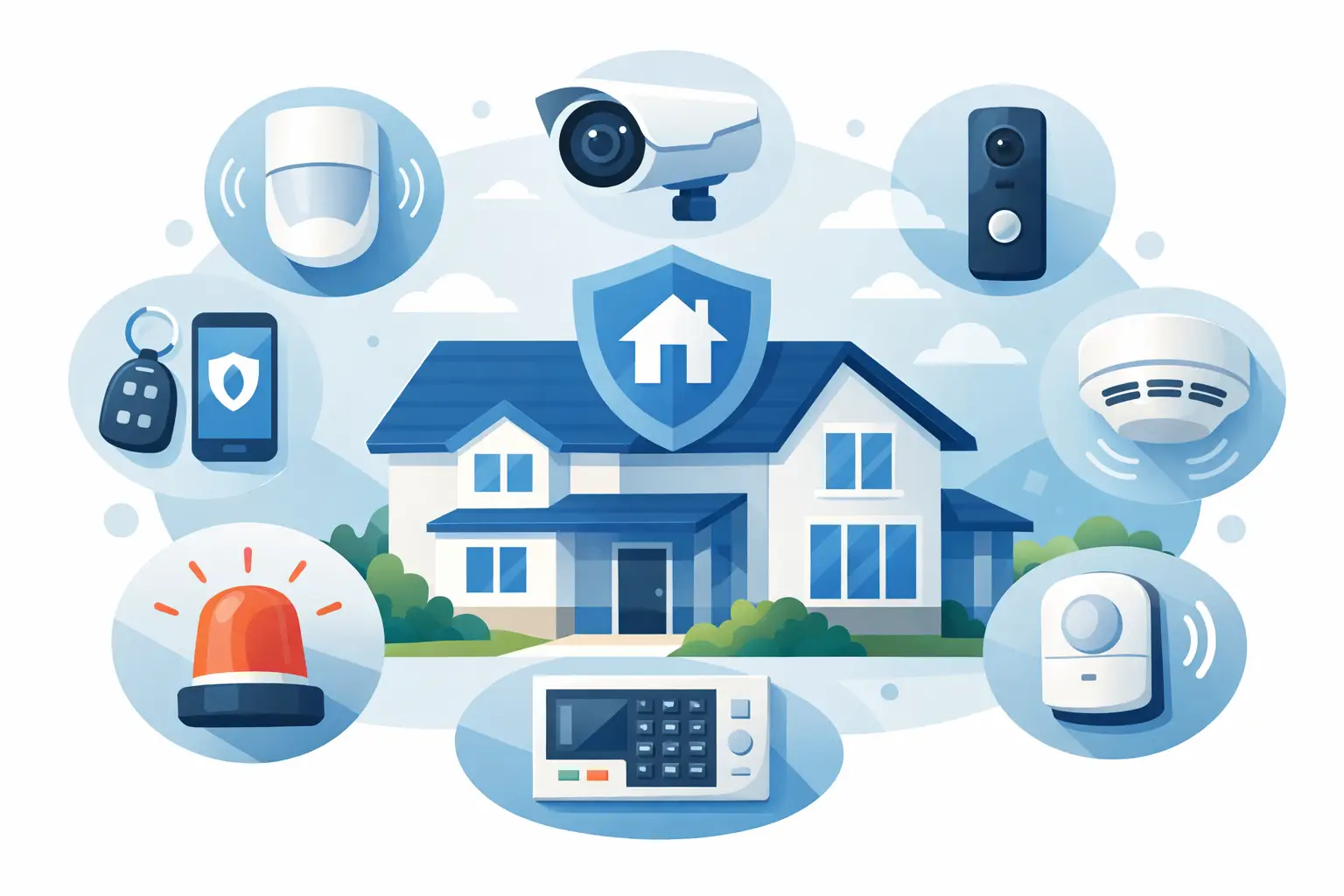

A front door sensor, one motion detector, and a phone app might sound like a complete setup until you realize every property protects itself a little differently. The real question is not whether you need security. It is which of the types of home alarm systems actually fits the way your home is built, used, and monitored.
Some homeowners want a basic burglary alarm that alerts them if a door opens. Others want full coverage with cameras, fire protection, smart locks, and remote control from a phone. The right choice depends on layout, budget, internet reliability, lifestyle, and how much support you want after installation.
Understanding the main types of home alarm systems
Most alarm systems fall into a few core categories, but the lines can overlap. A professionally installed system can be wired, wireless, monitored, and smart-enabled at the same time. That is why it helps to look at alarm systems by function, communication method, and level of service instead of assuming one label tells the whole story.
Wired alarm systems
Wired systems connect sensors, keypads, sirens, and control panels through physical cabling. These systems are common in larger homes, new construction, and properties where long-term reliability matters more than quick DIY setup.
The main advantage is stability. Hardwired devices are less dependent on battery changes and can be very dependable over time when properly installed. They also make sense when a property already has existing low-voltage wiring in place.
The trade-off is installation complexity. Running wire through finished walls can take more labor, so wired systems are often easier to install during renovations or construction than in a fully finished home.
Wireless alarm systems
Wireless systems use radio signals to connect sensors and devices to the main panel. For many homeowners, this is the most practical option because installation is faster and less invasive.
Wireless systems work well in finished homes where opening walls is not ideal. They also make it easier to add devices later, such as glass break sensors, flood detectors, or extra door contacts. Many modern residential systems are built around wireless technology because people want flexible coverage and mobile access.
The trade-off is maintenance. Batteries need to be monitored and replaced, and device placement matters. A quality installation still makes a big difference, especially in homes with challenging layouts or heavy signal interference.
Monitored alarm systems
A monitored system connects your alarm to a professional monitoring center. If a burglary, fire, panic, or other event is triggered, trained operators can verify the signal and contact emergency services when needed.
For homeowners who travel often, manage a second property, or simply want backup when they cannot respond right away, monitoring adds another layer of protection. It is also useful if an alarm goes off overnight or while the house is empty.
The main consideration is ongoing cost. Monitoring usually involves a monthly fee, but many property owners see value in having someone respond when they cannot.
Unmonitored alarm systems
An unmonitored system sounds a siren, sends app alerts, or both, but it does not rely on a central station to dispatch help. This option appeals to homeowners who want control without recurring monitoring charges.
It can be effective if you are usually available to respond to alerts and have dependable phone notifications. Still, it puts more responsibility on the homeowner. If your phone is off, you are on a flight, or cellular service is weak, an alert alone may not solve the problem.
Smart alarm systems and connected home security
Smart systems are among the fastest-growing types of home alarm systems because they combine intrusion detection with remote access and automation. Instead of using a keypad alone, you can arm or disarm the system from a smartphone, receive instant notifications, view camera feeds, and control connected devices.
This approach works well for busy households. You can let in a contractor, check whether your kids arrived home, or verify an alert without being onsite. Smart integration can also tie alarms to doorbell cameras, lighting, thermostats, and electronic locks.
That said, smart features should support security, not distract from it. A good system still needs dependable sensors, proper device placement, backup communication, and stable network configuration. Fancy app features do not make up for poor design.
Audible-only vs. full detection systems
Some homes have what people think of as a basic alarm system: a loud siren and a few entry sensors. These systems can deter intruders and alert neighbors, but they only cover a limited range of threats.
A more complete system may include door and window contacts, motion detectors, glass break sensors, smoke and heat detection, carbon monoxide detection, flood sensors, panic buttons, and low-temperature alerts. For many homeowners, this broader approach makes more sense because security risks are not limited to break-ins.
If you live in a larger home, have multiple entry points, or spend time away from the property, wider detection coverage is usually worth considering. The difference is not just convenience. It is the ability to know what is happening earlier and respond faster.
Perimeter alarm systems vs. interior protection
Perimeter systems focus on the outside shell of the home. They use door contacts, window sensors, and in some cases exterior devices to detect an attempted entry before someone moves through the interior. This can be a strong fit for homeowners who want to arm the system at night while still moving around inside.
Interior protection usually relies on motion detectors, interior cameras, and secondary detection zones. It is useful for confirming movement once someone is inside and for covering areas where perimeter devices may not tell the full story.
Most homes benefit from a mix of both. Relying only on motion detectors may leave too much time between entry and response. Relying only on perimeter sensors may miss activity in a garage, basement, or interior hallway.
Cellular, landline, and internet-based communication
Another major difference between alarm systems is how they send signals. Older systems often used landlines. Many modern systems use internet or cellular communication, and some use dual-path reporting for added reliability.
Landline communication still exists, but it is less common and usually less flexible. Internet-based systems can be fast and feature-rich, especially when paired with mobile access. Cellular communication adds resilience because it can keep reporting even if internet service drops.
For many homes today, cellular backup is one of the smartest upgrades. If someone cuts service, power goes out, or the router fails, the alarm can still transmit. That matters more than most homeowners realize until there is a real event.
DIY systems vs. professionally installed systems
DIY alarm kits have made security more accessible, and for small apartments or very simple homes, they can be enough. They usually appeal to people looking for lower upfront cost and fast setup.
But there is a difference between owning equipment and having a system that is properly designed for the property. Sensor placement, signal strength, camera angles, network setup, code compliance, and long-term service all affect performance. A professionally installed system is usually the better fit when the home has multiple floors, detached structures, existing legacy equipment, or a need for integrated cameras and access control.
That is where a local low-voltage contractor brings value. Companies like ATECH SECURITY LLC can assess the property, identify weak points, and build a system around how the homeowner actually uses the space, not just around what comes in a box.
Which types of home alarm systems are best for your property?
There is no single best answer because the right system depends on what you are protecting and how you want to manage it. A smaller home with reliable internet and a homeowner who wants mobile control may be well served by a wireless smart system with professional monitoring. A larger property may need a hybrid design with wired components, outdoor coverage, cellular backup, and integration with cameras.
If false alarms are a concern, system design matters. If pets roam freely, motion detector selection matters. If you travel often, remote access and monitoring matter. If your home already has an older alarm panel, an upgrade may be more practical than a complete replacement.
The best place to start is not by choosing a brand name off a shelf. It is by identifying your real priorities. Do you want deterrence, emergency dispatch, remote visibility, or complete property coverage? In many cases, the answer is all of the above, but the mix should match the home.
A good alarm system should feel dependable when you are there and just as dependable when you are not. When the setup is matched to the property, the technology becomes simple: it works when it needs to work.
Comments